
Traumatic Brain and Spinal Cord Injuries
Catastrophic injuries and their lifelong value
If whiplash sits at one end of the severity spectrum, traumatic brain injuries and spinal cord injuries sit at the other. These are among the hardest cases I take as a lawyer. Not because the harm is small, but because the harm is so large and, in many cases, so hard for an outsider to see. A person can lose a real part of who they are and still walk into a courtroom looking like everyone else in the room. Motorcycle riders absorb these catastrophic injuries more than almost anyone, which is why what a motorcycle accident settlement in Houston is worth depends largely on proving harm a jury cannot see.
That gap between how a person looks and how a person actually lives is the whole challenge of a brain injury case. Doctors break traumatic brain injuries into three categories: mild, moderate, and severe. With a severe injury, the deficits are right there in front of you, and a jury can see them. With mild and moderate injuries, the deficits are quieter, but they still cut deep into a person's daily life. And so much of what the brain does, executive functioning, memory, keeping yourself organized through an ordinary day, does not show up on the surface.
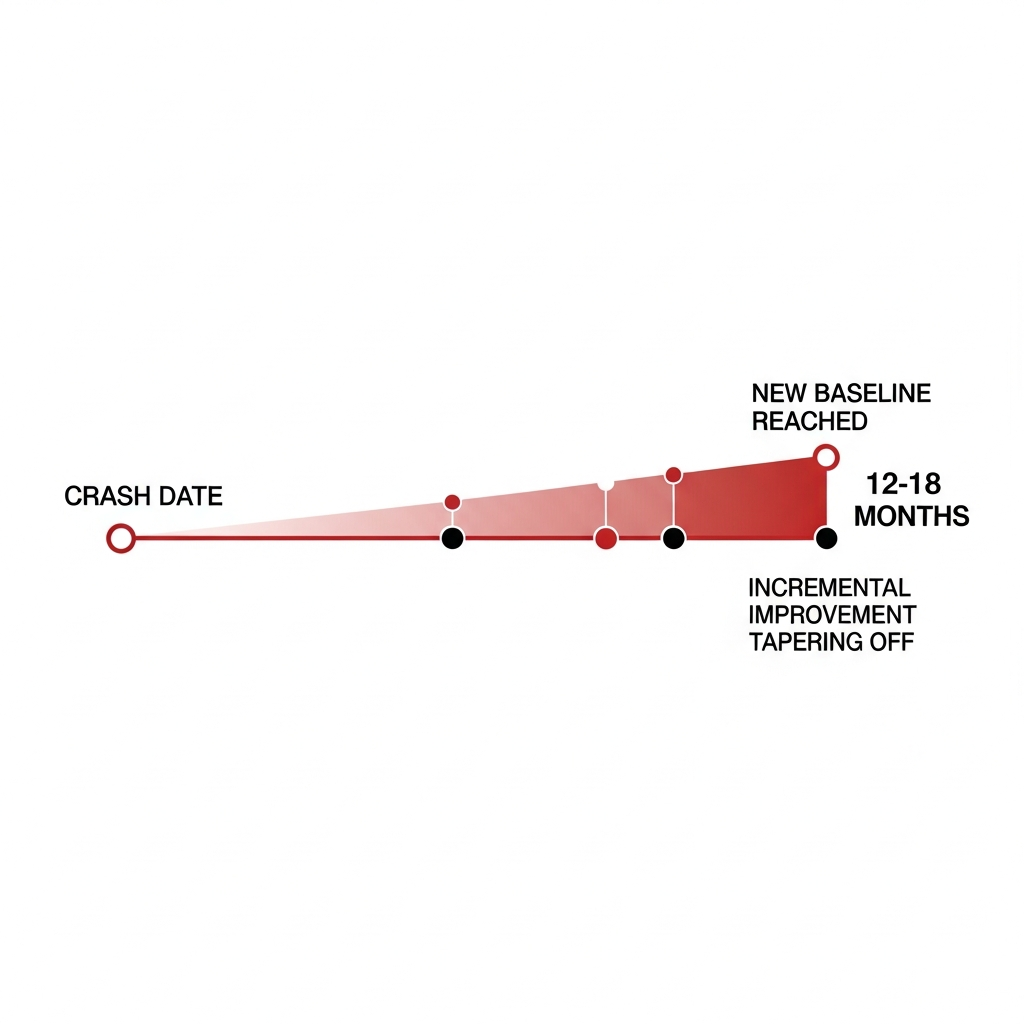
These cases also move on a longer clock than most. The body and the brain need time to heal before anyone can really say what the lasting damage is, and the studies put that window at twelve to eighteen months before a person reaches what becomes their new normal. That timeline shapes everything: when you work the case up, what testing you order, and how you ultimately prove the loss to a jury. Because the treatment costs so much and the deficits run so deep, the damages in these cases are usually far more significant, which is exactly why the right experts matter.
They'll walk into the courtroom and look normal, but as they're trying to organize themselves or keep track of their day or do certain things, have short-term memory recall, they have a lot of difficulties.
The Three Categories Of Traumatic Brain Injury
Traumatic brain injuries fall into three categories: mild, moderate, and severe. The difference between them is not just a question of how badly someone is hurt. It is also a question of how visible the injury is to everyone else.
With a severe traumatic brain injury, the deficits are obvious. People who meet that person will see them and can tell that something serious has happened. Mild and moderate injuries are different. They are far less recognizable from the outside, yet they still have a tremendous impact on the person's day-to-day life and on their activities of daily living. So much of what we depend on every day, executive functioning and the other work the brain quietly does, is hard to see when there has been a disruption. But when that disruption is there, it has a real impact on the person's life.
That is the part people miss. A mild or moderate label can make it sound like a small problem. It is not. It just means the harm hides better.
Why Mild And Moderate Injuries Are So Hard To Prove
Here is the difficulty at the center of these cases. A person with a mild or moderate brain injury will walk into the courtroom and look normal. There is no cast, no wheelchair, no visible sign that anything is wrong. Then they try to organize themselves, keep track of their day, or recall something from short-term memory, and the difficulties show up. The struggle is real, but it is the kind of struggle a stranger does not see in the first five minutes.
That is what makes these among the most difficult cases a lawyer can take, especially the mild and moderate ones. A jury has to be helped to understand a harm they cannot simply look at and recognize. My job is to make that invisible harm visible, to show how the disruption to executive function and memory actually changes how a person lives. When you can do that, a jury treats the person fairly. When you cannot, the appearance of normal does the defense's work for them.
And so if you are dealing with this kind of injury after a collision, this is the part of the case where experienced Houston car accident representation earns its keep.
The Twelve-To-Eighteen-Month Healing Window
These cases take longer to work up, and there is a medical reason for that. It generally takes anywhere from twelve to eighteen months before you really know where the healing process lands. What the studies show is that twelve to eighteen months is about how long it takes for a person with a brain injury to reach their new baseline, their new normal.
After that point, there can still be incremental improvement in a person's condition. But the studies show that improvement gets smaller. The big arc of recovery happens inside that window, and what is left at the end of it is, in large part, what the person is going to live with.
And so that is why I do not rush these cases. If you try to put a value on a brain injury before the person has reached their baseline, you are guessing. What that means is you wait until the medicine tells you what the lasting deficits are, and then you build the case around the truth instead of around a hope.
Documenting The Injury: Neuropsych And MRI Testing
Because so much of a brain injury is hard to see, the documentation has to do the seeing for you. There is neuropsych testing, which measures the cognitive deficits a person is left with. There is also newer MRI testing that helps people understand the nature of the injury and the specific deficits a person will carry forward.
This testing matters because it turns something subjective into something a jury can hold onto. When a person says they struggle with memory or with keeping their day organized, the natural question is, how do we know? Neuropsych and imaging are part of the answer. They are the objective record that backs up what the person is living through, and they give the experts something concrete to explain.
Treatment, Costs, And Why The Damages Run So High
Brain injuries do not get treated with a single visit. Depending on the extent of the injury, a person may need neurocognitive therapy, occupational therapy, and speech therapy. Part of working up the case is figuring out what your client actually needs based on the extent of their injuries, because no two of these injuries are the same.
All of that treatment costs a great deal of money, and the deficits cut deep into a person's quality of life. Those two things together are why the damages in these cases are usually much more significant than in a soft-tissue case. The medical bills are larger, and the loss the person carries through the rest of their life is larger.
To prove all of that, you have to work the case up and hire the right experts to explain to the jury what happened and why it happened. That is the through line of every serious injury case the firm handles, and you can see it across the firm's car accident practice. The expert is the bridge between a harm a jury cannot see and a verdict that treats the person fairly.
Common Questions
- What are the three categories of traumatic brain injury?
- Brain injuries are categorized as mild, moderate, and severe. With a severe injury, the deficits are obvious to people, that you will see them. Mild and moderate injuries are far less recognizable from the outside, yet they still have a tremendous impact on a person's day-to-day life because so much of what the brain does, like executive functioning and memory, is hard to see when it has been disrupted.
- Why are mild brain injuries so hard to prove in court?
- Because the person looks normal. They walk into the courtroom like anyone else, but as they try to organize themselves, keep track of their day, or recall things from short-term memory, the difficulties show up. The harm is real, but it is invisible to a stranger, so the lawyer's job is to make that harm visible to the jury so the person is treated fairly.
- How long does it take to know the full extent of a brain injury?
- It generally takes twelve to eighteen months. What the studies show is that twelve to eighteen months is how long it takes for a person to reach their new baseline, or new normal, after a brain injury. There can be incremental improvement after that point, but it is smaller, which is why these cases take longer to work up before you can value them honestly.
- What kind of testing and treatment do brain injury cases involve?
- Documentation usually includes neuropsych testing and newer MRI testing that help explain the nature of the injury and the deficits a person will have. On the treatment side, a person may need neurocognitive therapy, occupational therapy, and speech therapy, depending on the extent of their injuries. Because treatment costs so much and the deficits cut so deep into quality of life, the damages are usually much more significant.
Chapter Reflection
The hardest thing about a brain or spinal cord injury is that the person who is hurt the most often shows it the least. They walk into the room looking fine, and the deficits, the lost memory, the trouble organizing a day, only surface when you watch how they actually live. That is the whole job in these cases: to take a harm a jury cannot see and make it real enough that they can compensate it fairly. That work does not happen on its own. It takes the twelve-to-eighteen-month patience to let the injury reveal its true baseline, the right testing to document it, and the right experts to explain it. And it sets up the next piece of the puzzle, because a brain injury rarely travels alone. When someone breaks bones or suffers internal injuries in the same crash, the medical bills start adding up fast, and the calculation shifts again.