
Soft-Tissue Injuries, Whiplash, and PIP Coverage
Whiplash, strains, and your no-fault PIP coverage
The first half of this book was about the crash. The type of collision, who had the right of way, how Texas proportionate responsibility rules sort out fault when more than one driver did something wrong. That is one side of the equation. The other side is the injury. The type of injury you suffer drives what your car accident compensation is actually worth, and that side starts here, at the lower end of the severity scale. It is the heart of Hank's conversation on how car accident and injury types affect your compensation, and every injury chapter that follows builds on it.
Cars are built stronger and safer than they used to be. And that is a good thing for the people inside them, and it means that a lot of collisions produce injuries that are real but less severe than a broken bone or a surgery. Soft-tissue injuries and whiplash fall into that category. The reflex a lot of people have is to assume that a less severe injury means no case at all. That is the wrong conclusion. A less severe injury does not mean you have no claim. It means your claim has a different value.
That distinction is the spine of this chapter. Two people can walk away from two different crashes with two very different claims, not because one of them deserves justice and the other does not, but because the extent of their injuries is different and the law measures damages by that extent. Being reasonable about where your case sits on that scale is part of handling it well.
This chapter also covers personal injury protection, or PIP. It is no-fault money that sits on your own insurance policy, it is required in Texas unless you sign away the right to it, and it exists to help cover your medical bills and lost wages after a collision. Most people have it and do not realize what it does. By the end of the chapter you will.
I find that most of my clients just want to be treated fairly, want their medical bills paid for, and then a little bit of money for pain and suffering because they've had to deal with the discomfort and the pain associated with this collision.
A Less Severe Injury Does Not Mean No Claim
When someone gets told their whiplash is minor, the message underneath it is usually that the case is not worth pursuing. I want to be clear about why that framing is wrong. Just because you did not have a broken arm, a broken leg, or knee or back surgery does not mean your claim is not valuable, and it does not mean you do not have a right to compensation. You do.
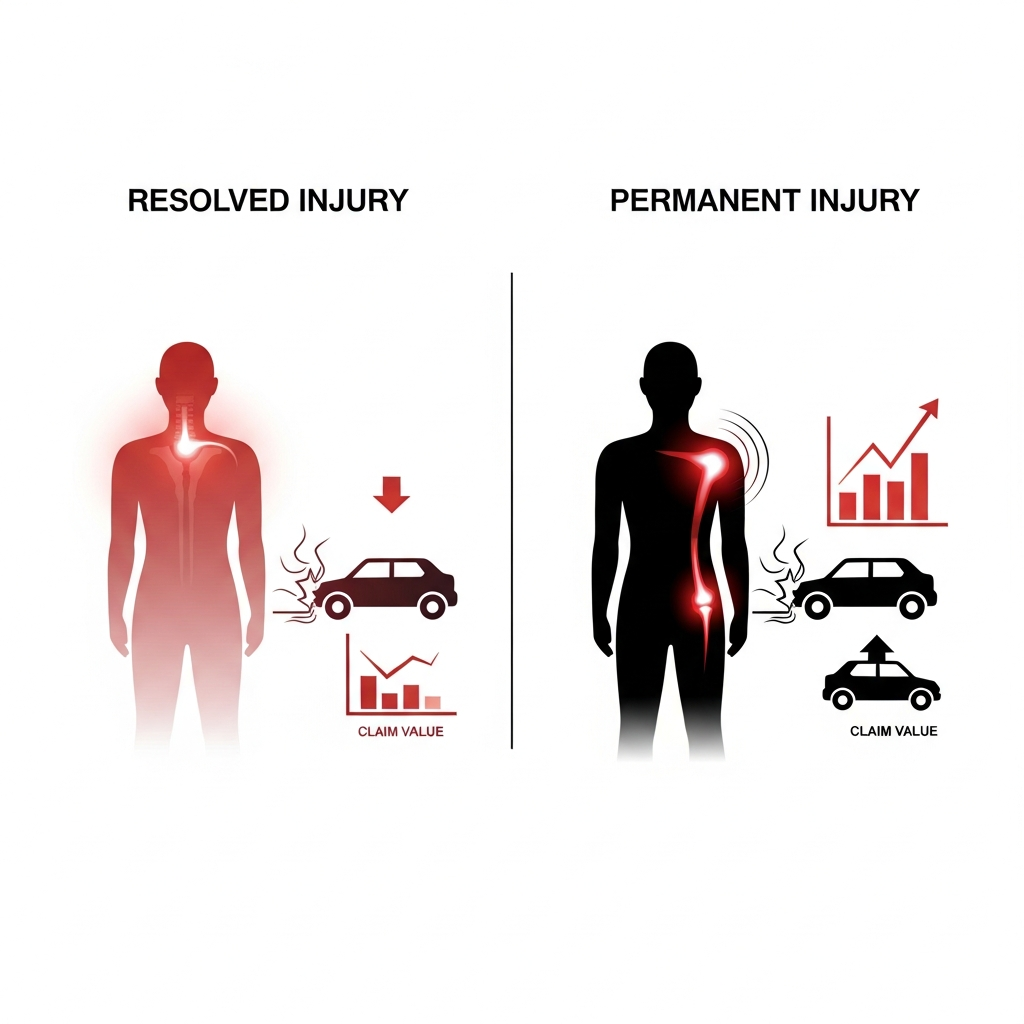
What it means is that the damages associated with your claim will be less. Each claim has a different value, and that value depends on the extent of your injuries. A soft-tissue injury that resolves over a few weeks is not measured the way a permanent injury is measured, and it should not be. The point is not that the injury did not happen or did not really hurt. The point is that the law puts a number on what you went through, and a less severe injury produces a smaller number, not a zero.
The honest version of this conversation is one I have with clients all the time. You have to understand where your case sits and be reasonable about it. Most people, once they understand it, are reasonable. They are not looking to turn a sore neck into a windfall. They want to be treated fairly, they want their medical bills paid, and they want a little bit for the pain and suffering they had to live with. That is a fair thing to want, and it is the thing the system, at its best, is built to deliver.
When You Need a Lawyer, and When You Do Not
Here is where I tell people something a lot of lawyers will not. Sometimes, on these cases, you do not really need a lawyer.
What we try to do is give clients a straight answer. I will tell someone, I think you need a lawyer for this case, or I think you could probably handle this on your own. It depends on the facts of your case and the extent of your injuries. If the injury is minor and the path forward is clear, I am not going to talk you into hiring me so I can take a cut of a claim you could have settled yourself for a reasonable amount.
That is not a soft spot in how we run the firm. It is the core of it. We only want to get involved in cases where we are adding value. If we cannot add value, we do not want to get involved, and we will tell you so. For more on how we think about car accident claims and when a lawyer actually moves the needle, our team covers it across our car accidents practice area, but the short version is this: the value we bring has to be real, or there is no reason to bring us in.
The reason I say this out loud is that it is the same instinct that makes a serious case work. A lawyer who will tell you that you do not need him is a lawyer you can trust when he tells you that you do.
Understanding PIP: No-Fault Money on Your Own Policy
PIP stands for personal injury protection, and it is one of the most useful and least understood pieces of a Texas auto policy. It is required in the state of Texas unless you specifically waive the right to it. The waiver has to be a signed writing. It cannot just be verbal. So unless there is a signed waiver in your file, your insurance company has to provide it to you.
The minimum amount of PIP coverage you can have in the state of Texas is $2,500. That is no-fault money sitting on your own insurance policy. What that means is it does not matter who caused the collision. You can claim it from your own insurance company to help offset the bills and the lost wages you sustained as a result of a collision. It goes to help pay your medical bills, and it goes to help pay lost wages, and it covers you and the occupants of your vehicle. If you want to read the consumer-side explanation of how PIP and other Texas auto coverages fit together, the Texas Department of Insurance lays out the required and optional auto coverages in plain terms.
For a soft-tissue or whiplash case, PIP often matters more than people expect. It is money that can start covering your medical bills and your lost wages while the rest of the claim gets sorted out, and it does not require you to prove the other driver was at fault before you can use it. On a lower-value claim, that no-fault money can be a meaningful part of how you come out whole.
Being Reasonable Is Part of Handling It Well
The thread running through all of this is reasonableness. A soft-tissue claim is not a lottery ticket, and treating it like one is the fastest way to a frustrated client and a stalled case. But it is also not nothing, and letting an insurance company convince you it is nothing is its own mistake.
The right posture sits in the middle. Understand the extent of your injuries. Understand that the value of your claim follows that extent. Use the PIP coverage you are entitled to. And get an honest read on whether you need a lawyer at all. Most of my clients land in a good place not because they pushed for the biggest possible number, but because they understood what fair looked like for their situation and held the insurance company to it.
Common Questions
- Is whiplash worth pursuing as a car accident claim in Texas?
- Yes, a whiplash or soft-tissue injury can be worth pursuing, but its value depends on the extent of the injury. As Hank puts it, a less severe injury doesn't mean that you don't have a right to compensation because you do. It just means that the damages associated with your claim will be less. Most clients in this situation simply want their medical bills paid and a little for pain and suffering, which is a reasonable and recoverable outcome.
- Do I need a lawyer for a minor car accident injury?
- Not always, and an honest firm will tell you so. Sometimes those cases, you don't really need a lawyer, Hank says, which is why his office will tell clients whether they think you need one or could probably handle it on your own. The answer depends on the facts of your case and the extent of your injuries. A free consultation is a low-risk way to get that read before you decide anything.
- What is PIP coverage in Texas and how much is required?
- PIP, or personal injury protection, is no-fault coverage on your own auto policy that helps pay your medical bills and lost wages for you and the occupants of your vehicle. It is required in Texas unless you sign a written waiver, and a verbal waiver does not count. The minimum amount of PIP coverage you can have in Texas is $2,500.
- Does PIP cover me even if the accident was my fault?
- Yes. PIP is no-fault money, which means it pays regardless of who caused the collision. You claim it from your own insurance company, and it goes toward your medical bills and lost wages. It also extends to the other occupants of your vehicle, not just the driver.
Chapter Reflection
The injury side of car accident compensation starts with an honest admission: not every claim is a big claim, and not every claim needs a lawyer. A soft-tissue injury is real, it is compensable, and it is also smaller than a surgery or a permanent loss. Telling clients that plainly, and pointing them to the PIP coverage already sitting on their own policy, is how you treat people fairly at this end of the scale. But the scale runs both ways. The same framework that produces a modest number for a whiplash case produces a very different number when the injury is catastrophic and permanent. That is where we go next, to the injuries that change a life and the damages that follow them.