
Medical Evidence, Treatment Gaps, and Maximum Medical Improvement
How records, treatment gaps, and MMI prove the injury
The crash explains how you were hurt. The injury explains what you were hurt with. But neither one, by itself, tells a jury what your case is actually worth. The bridge between an injury and its dollar value is the medical evidence, and that is what this chapter is about. A car accident compensation claim lives or dies on whether the people deciding it can understand the injury, believe it, and project it forward across the rest of your life.
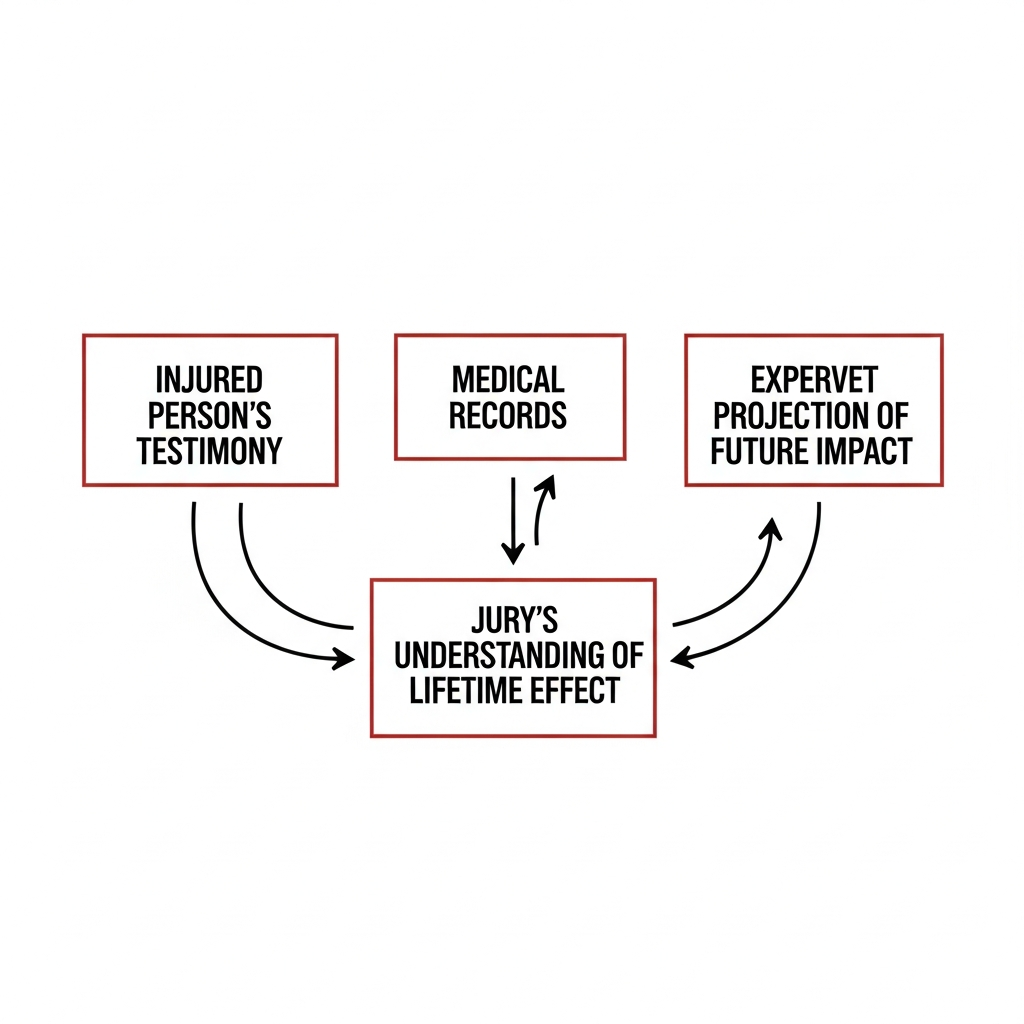
That last part is the hard part. A jury does not get to follow you home for the next forty years. They get a snapshot. They see you on a single day, in a single courtroom, and from that snapshot they are asked to decide how an injury you suffered at thirty is going to weigh on you at sixty or seventy. And so the medical evidence, and the doctors who explain it, are what let a jury make that decision honestly. Without them, the projection is guesswork, and guesswork rarely treats an injured person fairly.
This chapter walks through three things that quietly decide the value of serious cases. First, why medical experts are critical, not optional, in any case that goes to trial. Second, why gaps in treatment get used against injured people, and how a good lawyer answers that argument with the legitimate reasons behind the gap. Third, what maximum medical improvement means and how the restrictions that come with it reshape the entire damage model. Understand these three things and you understand how an injury becomes a number.
When you try a case in front of a jury, the jury just gets a kind of a snapshot of time. They know what happened in the past, but then they're asked to kind of project into the future. If you don't have the right type of medical experts, then it's really hard to give the jury the perspective that they need to understand how these injuries are going to affect the person the rest of their life.
Why Medical Testimony Is the Spine of Every Injury Case
In any personal injury case, the conversation with the jury is a conversation about injuries. You are telling twelve people what happened to your body as a result of an incident, whether it was a collision, an explosion, or anything else. The jury then has to decide how serious those injuries really are. So what do they look at? They listen to the injured person describe the pain. Then they go to the medical records to see whether the records support what the person is saying. Do the records show complaints of pain in the neck, the back, the arms? Are there objective signs of the injury? That cross-check, testimony against documentation, is the foundation of every claim.
The trouble is that medical science is only so good. Some injuries show up cleanly on an x-ray, an MRI, or a CT scan. Others do not. There are real, disabling injuries that simply cannot be seen on imaging, and for those you have to find the right medical experts to describe what the injury is, why it is there, and how anyone can know it is there. Experts explain the medical tests used to verify that an injury exists even when a scan looks normal. And so in the state of Texas, an injury you cannot point to on a film is still an injury you are entitled to be compensated for. You just have to prove it, and proving it takes a qualified voice.
There is a second thing experts do that the injured person cannot. A person can describe how they feel today and how they felt in the past. They cannot describe how they will feel in the future. As you go through life your body changes, and you carry more struggle as you get older. An injury at thirty layers on top of the ordinary aches of sixty and seventy, and a jury needs someone qualified to explain how that layering plays out, how it will touch your activities of daily living, your ability to get around, your quality of life. Only a doctor has the experience and the educational background to give reasonable testimony on those questions, and that is the difference between a claim that feels complete to a jury and one that leaves them filling in the blanks themselves.
How the Right Doctor Changes the Outcome
This is not theoretical. In practically every case that goes to trial, the doctor who testifies about the injured person's condition has a significant effect on the result, because the jury has to understand three things and a doctor is oftentimes the only one who can deliver all three. The causation and the forecast typically need to come from a doctor or the medical records. What happened to the person. Whether it was caused by the collision. And what the effects on the person's life are going to be. The injured person can speak to the first part of that and to how they feel now. The causation and the forecast have to come from medicine.
And so finding the right doctors and the right experts is part of the lawyer's job, not an afterthought. If you want to be successful in litigation, you have to find the doctors who can describe a client's injuries clearly enough for a jury to actually understand what happened. A claim is not won by insisting an injury is serious. It is won by making the injury legible to people who were not there and cannot see inside the body. Hiring the right experts to explain what happened and why is not inflating the case. It is making sure that the person is treated fairly through a process that does not hand fairness out on its own. You can read more about how we approach serious injury work at Sutliff & Stout's car accident practice.
Treatment Gaps and the Adversarial Process
There is a reality about litigation that injured people deserve to hear plainly. It is not a fair process. It is an adversarial process, and the two are not the same thing. One of the clearest places this shows up is in gaps in medical treatment. Gaps happen in most cases. How long the gap is matters. But because the process is adversarial, defendants will reach for a gap in treatment and use it to argue that there is nothing wrong with the injured person at all.
That argument conveniently ignores the legitimate reasons a gap exists. The injured person may not have health insurance. They may have a sick family member at home they are caring for, and their own appointments fall to the bottom of the list. They may have stopped taking pain medication because they were afraid of narcotics. None of that really means the injury healed. It means life got in the way of treatment, which is an ordinary human thing. But the way the process works, the defense gets to argue it however they want, so a one-month gap is usually not a big deal, while a six or seven month gap, with no explanation attached, becomes a weapon the defense tries to use to say there is nothing wrong with you.
Sometimes the gap is the treatment itself. Take a spinal ablation, a procedure that burns the nerves causing pain. After an ablation you generally will not need treatment again for another six to twelve months, because that is the treatment regimen the medicine calls for. The nerves that were burned regenerate, and only when the nerve grows back and the pain returns does the person need to go back in. So of course there is a six-month stretch with no doctor visits. That is not a sign of recovery. That is the procedure working exactly as designed. But a jury only knows that if someone explains it to them.
And so that explanation is the lawyer's job. As a plaintiff's lawyer, the work is to argue on the client's behalf for why the gap exists and why it is there, to understand the medicine well enough to make the gap make sense. Juries want to be fair to both sides. They will be fair if they understand why certain things are the way they are. Leave the gap unexplained and the adversarial process fills the silence with the defense's version. Explain it, and the gap stops being evidence of nothing wrong and becomes what it actually was all along.
Maximum Medical Improvement and the Day Future Care Ends
Maximum medical improvement, or MMI, is a phrase most people have never heard, and it can impact the value of your settlement. The term comes from workers' compensation. If you are an employee injured on the job and your employer carries comp, the carrier has an obligation to provide medical treatment until you reach MMI. Once you reach it, their duty to keep providing care ceases, and you move into a different regimen. That is where the idea was born.
In the personal injury context, outside of workers' comp, MMI does something a little different. It defines what medicine can actually do for you. Texas law entitles you to all medical care that is necessary and reasonable to treat your problem. Once you have reached maximum medical improvement, what that means is future medical treatment is not really going to help you anymore, so your future medical damages generally cease, unless some new science or new treatment comes along later. Take a spine that needed back surgery. You have the surgery. The doctor testifies about it. At that point you have reached MMI. You are as good as science can make you. Medicine cannot put you back the way you were before the crash. The honest line is exactly that blunt, and it is the kind of straightforward truth that does an injured person more good than false hope.
But here is the part people get backwards. Reaching MMI does not mean the damages end. It means the medical bills stop climbing, and the real question opens up: what limitations do you now carry for the rest of your life? After a back surgery, doctors will typically restrict you from heavy lifting or from repetitive work that could reinjure the part of the body that was hurt. Those restrictions are where the damage model is rebuilt. MMI closes one column, future medical care, and forces open a far larger one, the lifelong cost of what you can no longer do.
When Restrictions Rewrite the Damage Model
Consider the oil-field worker. That is very heavy work, lifting large bags, moving equipment, bending, stooping, handling well over a hundred or a hundred and fifty pounds on a regular basis, backbreaking work for long hours. If that worker needs back surgery, it is going to be genuinely hard to return to that job without risking re-injury. So when the doctor says he has reached maximum medical improvement, that is not the end of his claim. It is the moment the lawyer's work shifts. We have done for him everything medical science can do. Now the question is how that change affects the rest of his life. Will it affect his wages? Will it affect his quality of life? The job becomes explaining to the jury the value of those lost wages and that diminished quality of life so they can fairly compensate him.
The clearest example of how large this can run is a head-on case involving a man hit by an 18-wheeler. He was in the military and suffered significant brain injuries, some burn injuries, and other physical injuries. His injuries were severe enough that he was medically discharged, and he was three years short of reaching twenty years of service. The lawyer's task was to figure out the economic impact of that. He was fairly young, in his early forties. Had he made his twenty years, he would have received full military retirement starting the day he retired, and he could have worked a second job on top of it. Now he cannot do work at all, and he lost his retirement benefits. Building that case meant hiring a stack of experts: a military expert to explain the benefits, a legal expert on how the discharge affected those benefits, and an economist to total the value of everything he would no longer receive. It totaled into the millions of dollars, not because anyone reached for a big number, but because the injury reached into his earning capacity, his retirement, and his family's medical insurance all at once. The damage model simply reflected the size of what the collision took from the person.
This is what it means to connect the injury to its real value. You start with what medicine can and cannot do, you mark the point where future care ends, and then you trace every restriction outward into the life the person actually has to live. The dollar figure is downstream of that work. It is never the starting point.
Common Questions
- Why do you need a medical expert in a car accident case?
- You need a medical expert because the jury only sees a snapshot in time and then has to project your injuries across the rest of your life. As Hank puts it in his discussion of future-injury testimony, "a person can describe how they feel today and how they felt in the past, but they can't describe how they're going to feel in the future." That forward-looking testimony has to come from a doctor with the experience and education to give it. Experts also describe injuries that do not show up on an x-ray or MRI, so the jury understands an injury they cannot see.
- Can a gap in my medical treatment hurt my car accident claim in Texas?
- It can, because litigation is "an adversarial process, not a fair process," and defense lawyers use gaps to argue nothing is wrong with you. A short gap of about a month is usually not a big deal. A six or seven month gap with no explanation gives the defense room to attack. But there are often legitimate reasons, no health insurance, caring for a sick family member, fear of narcotics, or a treatment like a spinal ablation that only recurs every six to twelve months. The lawyer's job is to explain that reason so the gap makes sense to the jury.
- What is maximum medical improvement and why does it matter?
- Maximum medical improvement is the point where future medical treatment is not really going to help you anymore, so your future medical damages generally stop there. The term comes from workers' compensation, where a carrier's duty to provide care ends once you reach MMI. In a personal injury case it marks the moment you are as good as medicine can make you. It matters because reaching MMI does not end your damages, it opens up the question of what permanent restrictions you now live with.
- Does reaching MMI mean my damages are over?
- No. Reaching MMI means future medical care generally ends, not that your claim ends. The restrictions that come with it, like a doctor barring you from heavy lifting after back surgery, often drive the largest part of the claim. An oil-field worker who can no longer do heavy labor may lose far more in earning capacity and quality of life than he ever spent on medical bills. MMI closes the medical column and opens the lifetime-impact column.
Chapter Reflection
The thread running through all of this is honesty about what an injury actually costs over a lifetime, and the refusal to let an adversarial process erase that cost through silence. Medical experts exist to turn a snapshot into a forecast. The explanation of a treatment gap exists to keep a legitimate injury from being argued away. Maximum medical improvement exists to mark the line between what medicine can fix and what a person simply has to carry from here forward. Each one is a way of making sure the people who decide your case can see the whole picture and treat you fairly because of it. Once the picture is complete, the injury, the evidence, the lifetime impact, there is still one party standing between an injured person and that number. The insurance company has its own way of calculating what a case is worth, and it rarely starts where the medicine ends. That is where we turn next. If you are working through these questions on a real injury, the firm offers a free consultation through the Sutliff & Stout contact page.