
The Crash Types That Drive Houston Accident Claims
Why the kind of collision is the foundation of your claim
Most people don't realize that the type of crash changes everything about their case. And that single fact is the spine of this book. Two people can walk away from two different collisions on the same Houston freeway, and the value of their claims, the fights they'll have over fault, and the road to getting treated fairly can look nothing alike. A rear-end on I-45 is a different animal from a head-on out on a two-lane road, and the law treats them differently because the facts are different. And so before we get into injuries, insurance, or what a case is worth, we start where every car accident compensation claim starts: with the crash itself. That includes the rideshare crashes now common on Houston streets, where sorting out an Uber accident settlement in Houston layers a commercial insurance policy on top of the usual fault fight.
Here's the throughline to hold onto as you read. The type of crash and the type of injury, together, determine what a Texas claim is really worth. The crash sets up the fight over who's at fault. The injury sets up the value of what was lost. You need both halves to understand your case, and this chapter is the first half of the equation. Later chapters dig into proportionate responsibility, the injuries that drive compensation, and how the medical evidence ties it all together. This one walks the everyday crashes we see most in Houston and shows why the type of collision shapes the claim from day one.
If there's one thread that runs through nearly all of them, it's this: most of these crashes trace back to the same root cause. Not bad luck, not bad roads. Someone wasn't paying attention. Understanding that is the start of understanding your own case.
We see a lot of different types of accidents, whether it be a rear end side swipe, running a red light, failure to control speed. But the most common theme that all the accidents have is some type of distracted driving, whether it be cell phone, messing around with something in the car, or just generally not paying attention.
The everyday crashes we see most in Houston
When people picture a serious collision, they often jump to the dramatic ones. But the crashes that fill our caseload are the ordinary ones that happen on Houston streets and highways every single day. Rear-end collisions. Sideswipes. Drivers running a red light. Drivers who failed to control their speed and couldn't stop in time. None of these are exotic. That's exactly the point. These are the everyday crashes that lead to substantial injuries, and they're common precisely because the behavior behind them is common.
What ties them together is not the kind of road or the time of day. It's a driver who wasn't where they should have been mentally. Somebody on a cell phone. Somebody reaching for something in the car. Somebody just generally not paying attention. And when we look back across the accidents we handle, that's really the most common theme by far. The driver who caused the collision did it because he or she wasn't paying attention to the road in front of them. The crash type may change, but the human cause behind it rarely does.
That matters for your claim because the root cause of a crash is part of its story. A driver who looked up too late from a phone is a driver whose attention was somewhere it shouldn't have been, and that's often what the fight over fault comes down to.
Why a rear-end on a Houston highway is usually a stronger case
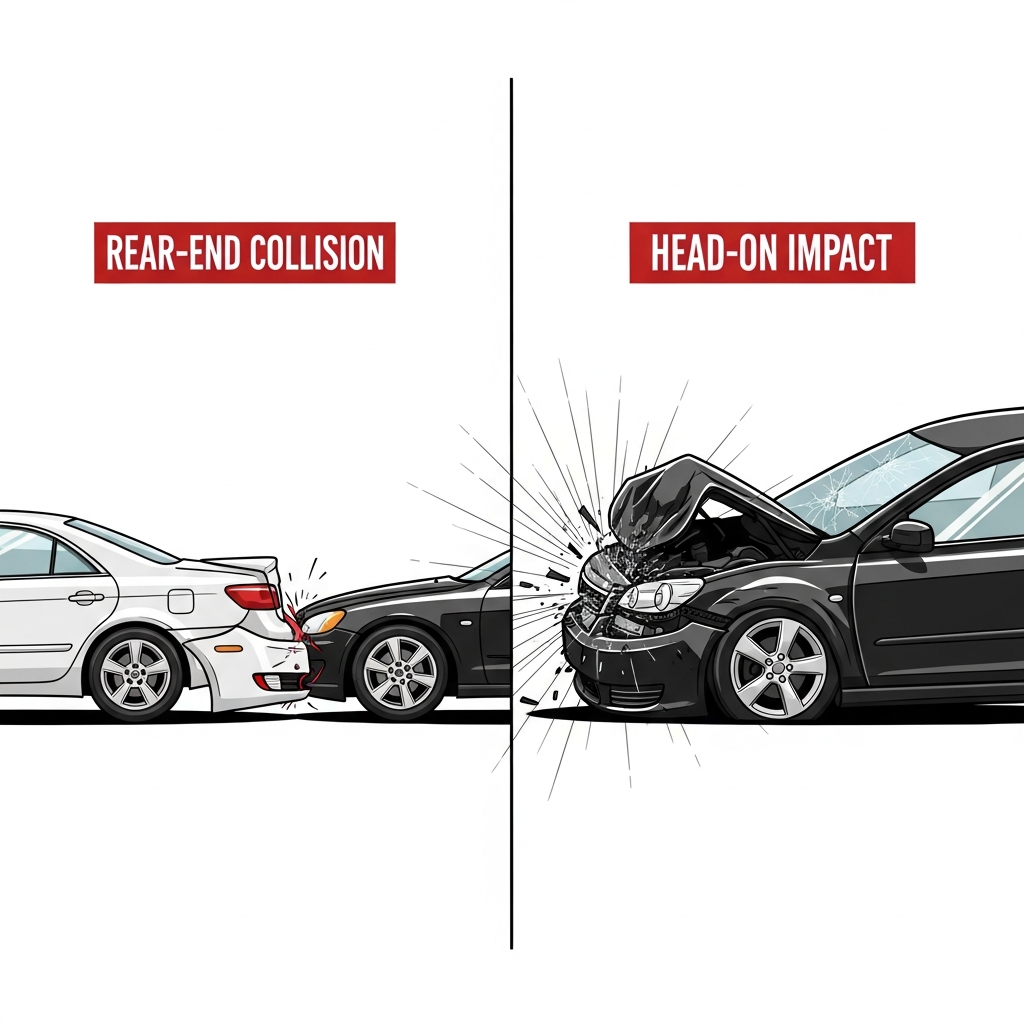
Of all the everyday crashes, the rear-end is the one people ask about most, and they're often unsure how strong their case really is. When someone gets rear-ended on a Houston highway, it's usually a stronger case. The basic rule of the road is that you're supposed to be able to stop for the traffic in front of you, so the driver who hits you from behind starts off on their back foot.
But usually doesn't mean automatically. Oftentimes the at-fault driver is going to say they got cut off, or that somebody slammed on their brakes in front of them. That's the move, and you should expect it. And that's why what you do in the moments and days after the crash matters so much. Documenting what happened, taking pictures, and making sure that you have all the information is really critical to proving that the other person was in fact at fault for the collision. A stronger case is still a case you have to prove, and the proof is the evidence you gather while it's still there to gather. If you've been rear-ended in Houston and you're not sure where you stand, that's exactly the kind of situation our Houston car accident lawyers talk through with people every day.
When the crash type changes the stakes entirely
Not every crash sits in the same range. A head-on collision is a different category of event. When you have a head-on, both cars are usually traveling at high speed, and the forces involved are pretty great. When those forces are that severe, the injuries tend to be much more significant. We handle a lot of head-on collisions that involve death or dismemberment, and they can permanently impact a family's life.
That's the clearest illustration of why the type of crash changes everything. A sideswipe and a head-on are both car accidents, but they don't belong in the same conversation about value, because the physics that drives the injury is so different. The greater the forces, the more significant the injuries tend to be, and the more a family's life can change in an instant. The crash type is the first thing that tells you what kind of case you're dealing with, and a high-speed head-on tells you, immediately, that the stakes are high. We'll get deep into how injury severity drives compensation in the chapters ahead. And so for now, the takeaway is that the collision itself is the first signal of how serious the claim is going to be.
Common Questions
- What are the most common types of car accidents in Houston?
- The most common are rear-end collisions, sideswipes, drivers running a red light, and failure to control speed. What ties almost all of them together is one root cause. As Hank puts it in the conversation this book is drawn from, "the most common theme that all the accidents have is some type of distracted driving." Whether it's a cell phone, messing with something in the car, or just generally not paying attention, the driver who caused the collision usually wasn't watching the road.
- If I got rear-ended in Houston, is my case strong?
- Usually, yes. When someone gets rear-ended on a Houston highway, "it's usually a stronger case," because the law expects you to be able to stop for the traffic ahead of you. But expect the other driver to claim they were cut off or that someone slammed on their brakes. That's why documenting the scene, taking pictures, and gathering all the information early is critical to proving they were at fault.
- Why are head-on collisions treated as more serious?
- Because of the forces involved. In a head-on, both cars are usually moving at high speed, and those forces are great enough that the injuries tend to be much more significant. These are the crashes that can involve death or dismemberment and permanently impact a family's life. The severity of the crash is the first signal of how serious, and how valuable, the claim is likely to be.
- Does the type of crash really affect what my case is worth?
- Yes, and it's the foundation of everything. The type of crash and the type of injury together determine what a Texas claim is worth. The crash type sets up the fight over who was at fault and points to how severe the injuries are likely to be. A minor sideswipe and a high-speed head-on start in completely different places, which is why the collision itself is where understanding your case begins.
Chapter Reflection
The crash you were in is more than the story of a bad day. It's the starting point that shapes the fault fight, signals the severity of the injuries, and frames everything about what comes next. The everyday collisions we see most in Houston tend to share a single root cause, and the dramatic ones carry their own weight because of the forces involved. Either way, the type of crash is the first thing that tells you what kind of claim you have. But the crash is only half the equation. A collision tells you how the fight over fault will likely go and how hard the impact was. What it can't tell you, by itself, is the full value of what was lost. For that, you have to look at the injury, because the type of injury is the other half of what your case is really worth. That's where we turn next.